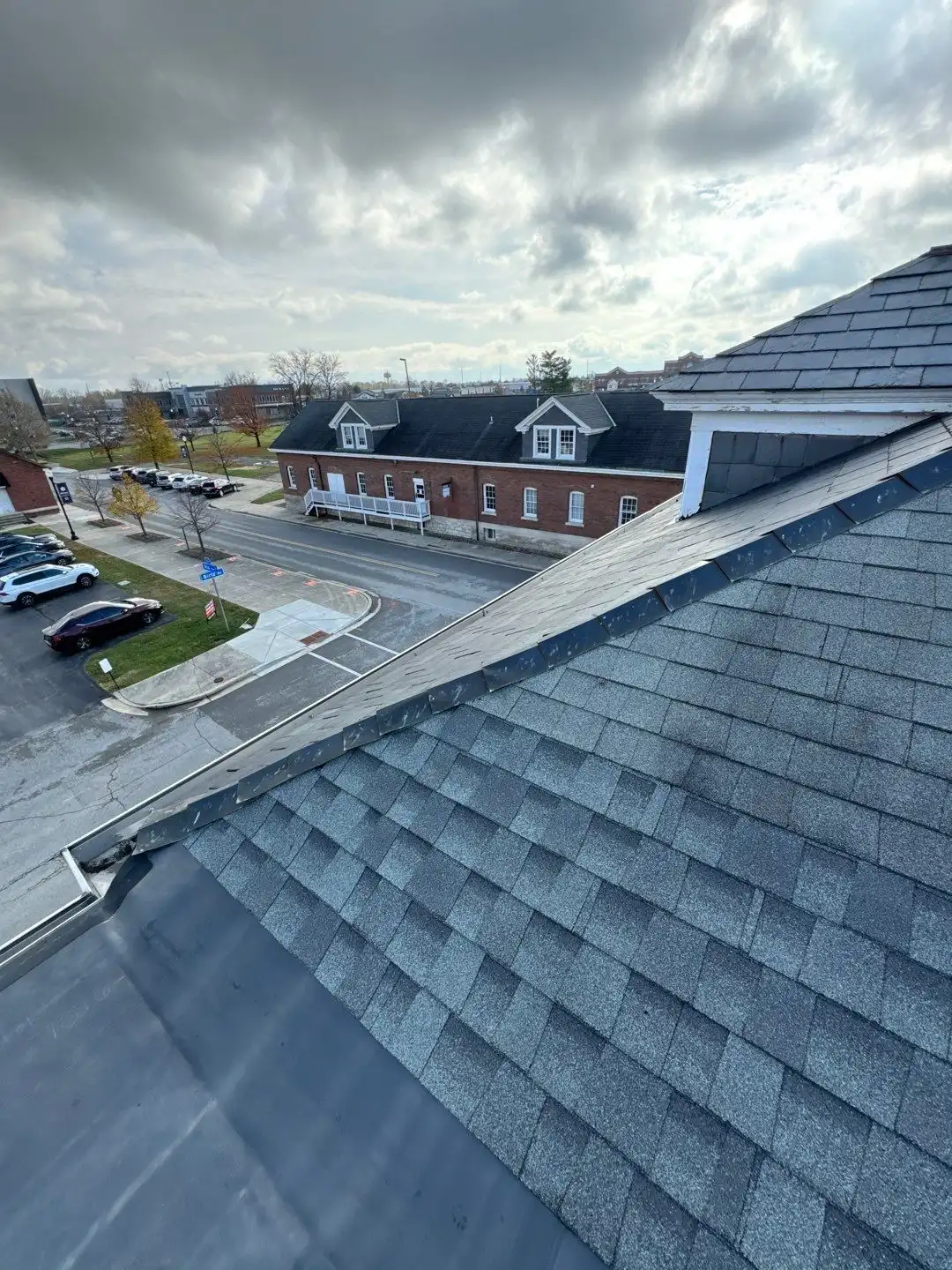
The 7 Cost Drivers That Actually Move Your Number
- Square footage and roof geometry. Penetrations, curbs, and parapets add labor far more than flat open field.
- Existing roof condition. Wet insulation under the membrane often doubles tear off cost.
- Deck type. Metal, wood, or concrete decks each carry different fastening and prep requirements.
- Membrane or material choice. TPO, EPDM, modified bitumen, PVC, and standing seam metal sit at very different price points.
- Insulation R-value. Indiana energy code targets push polyiso thickness up, and polyiso is priced by the board.
- Access and staging. Crane time, occupied tenant spaces, and night work all push labor.
- Warranty tier. A 10 year contractor warranty and a 20 year NDL manufacturer warranty are not the same product.
Ballpark Cost Ranges in Brownstown
Numbers below are per square foot, installed, for typical low slope commercial work. Steep slope and architectural metal run higher.
- Targeted leak repair: $400 to $1,800 per visit
- Section repair with membrane patching: $8 to $18 per sq ft of repair area
- Roof coating (restoration, not replacement): $3 to $7 per sq ft
- EPDM replacement: $6 to $10 per sq ft
- TPO replacement: $7 to $12 per sq ft
- PVC replacement: $9 to $14 per sq ft
- Modified bitumen replacement: $8 to $13 per sq ft
- Standing seam metal: $12 to $22 per sq ft
How to Match the Material to the Building
Not every membrane fits every Brownstown property. A few quick matches that Brownstown Commercial Roofing sees work well:
- Restaurants and food processing: PVC handles grease exhaust and chemical exposure where TPO will degrade early.
- Warehouses and distribution centers: TPO over mechanically attached polyiso hits a strong cost to performance ratio across large open fields.
- Office and retail with rooftop HVAC: EPDM or TPO with extra walk pads and crickets protects high traffic zones around units.
- Schools, churches, and municipal: Standing seam metal pays back over decades when budgets allow the higher first cost.
- Older buildings with sound decks but tired membranes: Silicone coating restoration extends life without a full tear off.
Bidding Smart: 6 Things to Compare Line by Line
- Insulation R-value and number of layers
- Fastening pattern (mechanical, adhered, ballasted)
- Edge metal gauge and ANSI/SPRI compliance
- Warranty type, length, and wind rating
- Manufacturer (and whether the contractor is approved by them)
- Daily dry in plan during the tear off
Two bids with the same square footage and material can be $40,000 apart for legitimate reasons. The cheap bid often skips tapered insulation, downgrades edge metal, or specifies a contractor warranty instead of an NDL. Ask. If the answer is vague, that is your answer.
Hidden Line Items That Surprise Owners
- Tear off disposal fees, which scale with weight, not just area
- Code required insulation upgrades on full replacements
- Crickets and tapered insulation around HVAC curbs
- Walk pads where service techs cross the roof
- Gutter and downspout replacement when membrane terminates into them
- Lightning protection re bonding on metal systems
- Skylight replacement (often more cost effective during a tear off)
- Asbestos testing on roofs installed before 1985
- Overnight security or fencing for staged materials on tight urban sites
Repair Categories and What They Usually Cost
- Single penetration reseal: $400 to $900
- Pipe boot or vent flashing replacement: $500 to $1,200 each
- Seam re weld (TPO or PVC): $8 to $14 per linear foot
- Wet insulation cut out and patch: $15 to $25 per sq ft
- Parapet wall flashing repair: $25 to $60 per linear foot
- Storm related emergency tarp and dry in: $1,500 to $5,000 depending on area
When water is already inside the building, every hour the leak continues compounds the interior damage. We prioritize tarp and dry in for active leaks so the interior stops getting worse while the permanent repair gets scheduled. If the ceiling has already let go, you may also need attic and ceiling water damage restoration alongside the roof work.
Red Flags in a Commercial Roofing Proposal
- No mention of the existing deck type or insulation thickness
- "Allowances" for wet insulation instead of a defined unit price
- Generic warranty language without the manufacturer name attached
- No daily progress and dry in plan, especially for phased tear offs
- Missing edge metal specification or a vague "code compliant" note
- No proof of the contractor's approved applicator status with the manufacturer
- Lump sum pricing with no line items to compare against other bidders
Budgeting Across the Roof's Life
Treat the roof as a 20 year asset, not a one time purchase. A reasonable plan for a Brownstown commercial property:
- Years 1 to 5: Annual inspections, drain cleaning, minor seam touch ups. Budget $0.05 to $0.15 per sq ft per year.
- Years 5 to 12: Flashing repairs, walk pad replacement, sealant refresh at penetrations. Budget $0.15 to $0.30 per sq ft per year.
- Years 12 to 18: Consider a silicone or acrylic coating if the membrane is sound. This is the window where restoration pays back best.
- Years 18 and beyond: Plan capital reserves for full replacement, including code upgrades and any deferred deck repairs.
Owners who fund the small annual line items rarely face the surprise capital event. Owners who defer routine work tend to replace roofs five to seven years earlier than the material itself would have required.
Repair or Replace? 5 Questions to Answer First
- Is the membrane more than 75% through its expected service life?
- Are there multiple active leaks, or one isolated source?
- How wet is the insulation under the membrane (core samples will tell you)?
- What is the deck condition where leaks have been chronic?
- Does your business plan keep you in this building for the next 10 years?
If three or more answers point toward replacement, repairs become throwing money at a finished system. If only one or two do, a documented repair plus a coating can buy you five to seven more years. A proper commercial roof inspection with infrared moisture scanning answers most of these for you.
When Storms Force the Decision
Brownstown sees hail, straight line winds, and freeze thaw cycling that punish older membranes. After a significant storm, schedule an inspection within a week even if you do not see interior leaks. Insurance carriers tighten claim windows, and small punctures grow. If water has already migrated inside, our team can help with both the roof side and the commercial roof repair coordination so you are not juggling two contractors.
Document everything before crews arrive. Date stamped photos, interior damage notes, and a copy of the last inspection report give your adjuster the picture they need. Brownstown Commercial Roofing provides itemized scope documents that align with carrier expectations, which tends to shorten the back and forth on coverage decisions.
Material Lifespans You Should Plan Around
- EPDM: 20 to 30 years
- TPO: 17 to 25 years
- PVC: 20 to 30 years
- Modified bitumen: 15 to 20 years
- Standing seam metal: 40 to 60 years
- Acrylic or silicone coating over existing roof: 10 to 15 years added